Showing posts with label planting. Show all posts

Wednesday, October 20, 2010

Fall Fun on the Roof

Autumn winds have blown into DC and we’ve been getting the Georgetown Rooftop Food Project ready for cool weather. Aside from gorgeous views like this one:


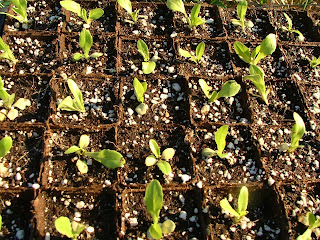
there are the regular fall garden tasks to check off the list. First things first—getting a new round of cold-hardy crops planted. On October 1 we sowed seeds for Encore lettuce mix, Ovation greens mix, Minutina, Mei Qing pac choi, Mokum carrots, Merlin beets, Hakurei turnips, and three kinds of radishes (Miyashige, Red Meat, and Easter Egg). Now, a few weeks later, we have cute ruffly rows of baby greens and root crops.


Another fall job is saving seeds to squirrel away for next year’s plantings. Sunflower seeds are easy—you just pry seeds out of the dried up flower head and pick off the husks.


Tomato seeds take a few more steps. After scooping the seeds into a bowl, you have to let them ferment for a few days until moldy, then rinse several times in clean water, which washes away the poorer quality seeds and leaves the viable ones. Good step by step instructions for saving tomato seeds can be found here.


With tomato production winding down and first frost on the way, it’s time to clear spent vines and sow cover crops! It’s fun to cast handfuls of winter rye, hairy vetch, and spurs oats seeds across the cleaned up beds. These cold-hardy cover crops will protect the soil from wind and rain and help build nutrient levels for next season. This site gives some good pointers on maintaining soil fertility in raised beds.


And to help with autumn clean up, we assembled two new compost bins so we can turn our garden “waste” into a nutrient goldmine right on the roof!

Thursday, September 30, 2010

"We're All Rookies"

Today marks the 7 week anniversary of my internship with Local Food Project. 7 weeks before starting here I had the very first farming experience of my life--for less than two hours, I picked garlic with friends at a nearby farm. As I paused to stretch my stiffening back and wipe beads of sweat from my brow, I reflected on my newfound appreciation for the demands of farming and made a firm decision that farming is not for me. 

The following week I visited the Local Food Project at Airlie and helped pull weeds, which was surprisingly enjoyable. Wandering around the garden and briefly exploring the grounds of Airlie, I wondered-- what is this place? I knew I wanted to come back.

When the opportunity arose to intern here, I found a place to crash for a while and thought I'd give LFP a try for a couple weeks. On my first day, Pablo mentioned something about giving me my own space to garden independently. I gently reminded him, "You know I'm a rookie, right?" Pablo's response: "We're all rookies." Nearly two months have passed, and I'm still happily interning here.

Some highlights so far:

My first week was filled with weeding overgrown sweet potato beds. It was a daunting task, but it was a good way to start because after that everything felt more fun.

Finding and killing my first hornworm was a monumental occasion. Ben had warned me about them and pointed them out several times, but it took me a while to independently spot one. Ever since I developed an eye for them it feels like I see hornworms everywhere--they've even visited me in my dreams at night.

One week we individually added compost to each squash and melon plant. It was well worth it--their boost in growth was visible after the weekend.

LFP hosted a Harvest Dinner on September 7th. It was refreshing to swap out my Chacos and dirt-stained t-shirt for a dress and lounge in the garden, sipping wine as the sun set. Airlie chefs set up a makeshift kitchen in the garden and prepared our meal outside. Almost all of the food before us was cultivated by someone sitting at this dinner table, sharing this meal. We enjoyed delicious dishes and compelling conversation by candlelight, with the Big Dipper illuminating the night sky overhead.

Visiting Jo-Ann Fabrics and selecting fine materials to make flags for the corn maze. We picked red, yellow, blue and green fabrics for the flags--and a cash money print as a little lagniappe. Using bamboo, t posts and twine, we set up four flag poles throughout the corn maze and began brainstorming game ideas for Airlie guests.

Being a city girl, the thrill of riding in the back of a pickup truck never dulls. In anticipation of the end of the season, we cleared the garden of row covers, folded them, and loaded them in the bed of Pablo's truck. We piled ourselves on top of the fluffy row covers for a cozy ride through Airlie. A slightly less comfortable but nonetheless fun ride was transporting the revered sixteen foot ladder to the garden--Ben and I holding it in place by sitting on it.

We used broadforks to clear the family garden. We redefined the rows, mixed in compost, and planted lettuce seeds. Pablo's instructions for appropriately distributing the seeds: "A little thick, A little not too thick." It made sense.

And finally, welcome rain has arrived!

Monday, June 14, 2010

June Update

Hello faithful readers! Ben here. It's hard to believe we're already half way through June--the month is passing by like an afternoon shower!


The past month has been full of activity here at the Local Food Project. So full, in fact, that we haven't kept up with this blog as much as we would like. Since so much has happened, let's lean on this writer's favorite crutch: bullet points. Here's a smattering of what we've been up to at the LFP.

  • We attended another great CRAFT program event at The Farm at Sunnyside. A great turnout and a lot of great food! See this post for more about the CRAFT program.
  • Pablo contributed an article to Flavor Magazine, describing the CRAFT program its value to aspiring farmers.
  • We planted 30 beds (2700 sq ft) of squash, cucumbers, zucchini, lettuce mix, and beets...in one day!

  • Filled the hoop house with tomatoes, peppers, and eggplant.
  • Completed various infrastructure projects such as reinforcing our deer fence and cutting new row cover.
  • Humanely trapped a family of groundhogs whose home was not even ten feet from our squash beds. We dropped them off far away from the garden. I believe a groundhog is born with the right to look for his shadow, as long as that shadow is not cast on our crops.
  • Hosted several tours and a team building dinner with guests at the Airlie Center.
  • Last, but certainly not least, we acquired two interns to (do all of the) work for us during the next 6-8 weeks. Welcome Shaina and Yuka!

Now you're up to speed. We have another CRAFT event this week and plants growing quickly, so we'll have more to report soon.

Monday, April 19, 2010

Away We Go

Hello Readers! Spring is in full swing at the LFP (with a little summer weather mixed in), which means it's time to get to work. For Pablo, that means it's time to hire a new drone to do the work for him. Ladies and gentlemen, I am that drone.


My name is Ben Hanna and I'll be the Local Food Project Coordinator for the 2010 season. Of course, I'm treated better than a drone and I'm excited for working with Pablo and other Airlie Center staff in the coming months.

During the past week I've been familiarizing myself with the LFP's 3 acres and trying to soak up as much of Pablo's wisdom as possible. We've been working in the hoophouse for the most part while the ground outside warms up a bit. We sowed cress, cilantro, and phak choi last week, with potatoes and lettuce going in this week. I'll check back in soon!

Monday, March 22, 2010

Spring Garlic Greens


March is the fastest month of the year here at the LFP garden! Not in terms of harvest, or even physical activity, but the rate of change. To recap: the month started with piles of snow and broken tree limbs everyhwere, as the DC area slowly recovered from the mess of 'snowmaggedon', 'snowcalypse', and whatever over-the-top phrase used to describe the over-the-top winter storms we endured here in early 2010.

And just a few weeks later, the frogs are out hopping, trees are budding rapidly, the grass is green, and farmers already feel behind!

The sound of geese heading North at pre-dawn makes for restless starts to mornings. We farmers and gardeners twist and turn with all the things we still need to get done in the mythical 'off-season', that seeming infinite expanse of winter to do all possible manner of projects, which instead got stuffed with holidays, snow, and sleep.

How is it that three weeks can take us from a blanketed winterland to the humid, dark green rush of flora and fauna energy?

Add to this surge in biological activity a surge in the length of our daytime, thanks to Daylight Savings. Days seem suddenly hours longer, like we've been propelled into a new world where we have an extra half day with which to start seeds, clear old stalks from the garden and repair fence lines.

March brings a frantic close to winter, and a rapid start to spring. It's all evident in the Garlic, which takes the early lead as it shoots through the winter straw mulch.

Thursday, October 8, 2009

What Kind of Lettuce Will You Plant?

Did you stop by the Local Food Project booth at the Green Festival October 10 and 11 and pick up a free lettuce seedling? Then check out the pictures below to figure out what variety you have.

Yugoslavian Red Butterhead

Deer Tongue

Forellenschluss

Capitan
Rouge D'Hiver

Wednesday, June 3, 2009

Tomatoes, Start Your Engines!

As temperatures begin to climb, the Local Food Project hoophouse is becoming a hot, humid environment—perfect for tomatoes eager to get out of their flats and into the ground. Last week the LFP crew planted three hoophouse sections (about 100 square feet each) of different kinds of tomatoes. We gave our favorite from last year—Sun Gold—center stage in the wide bed right inside the main door. Other varieties we’re looking forward to harvesting include Pineapple, Brandywine, Geronimo, Glacier, and Cobra. With basil interplanted between the tomatoes, the hoophouse truly has the aroma of summer!

Wednesday, May 6, 2009

We Want Candy…and 1st Edition and Leeks!

It’s onion planting time at the Local Food Project garden and we’re excited about getting this crop in the ground. We planted Candy, a delicious yellow onion we couldn’t get enough of last year, alongside Red Candy Apple, a new red variety from Dixondale Farms. In another section (five 3x33 foot beds), we’ll plant 1st Edition and Red Torpedo Tropea, then put in a section of leeks. We’re also experimenting with two different planting styles. The first is our regular four-row, one onion every six inches layout. The second has only two rows spaced wider apart and bunches of four onions every foot. The same number of onions go into each 33 foot bed so we’ll see how they do and compare the yields from each.

Thursday, December 11, 2008

Winter’s Many Shades of Green

Our new batch of seeds for the hoophouse recently arrived and we can already envision the tasty salads we’ll be harvesting for Airlie Center’s guests come February.

Arugula—Astro
Asian Greens—Yukina Savoy and Tatsoi
Cress—Presto
Pac Choi—Mei Qing
Allstar Lettuce Mix
Encore Lettuce Mix
Minutina (Erba Stella)

Monday, November 3, 2008

Winter salad bar

This fall marks the Local Food Project’s first season growing veggies in our new passive solar hoophouse. The structure was built with assistance from members of the community during a workshop led by biodynamic farming guru Steve Moore. We laid out the beds and aisles to allow easy access for visitors, setting aside a gathering space in the middle for wine tastings or warming up with hot cocoa. We’re still putting the finishing touches on the hoophouse—installing solar-powered vents, constructing doors from sustainably logged wood—but the cool-season crops we’ve planted are already making great progress.

Here’s what we’re growing:

Green Lettuce—Jericho
Red lettuce—Red Cross, Yugoslavian, and Sweet Valentine
Kale—Laci Nato, Vates
Bok Choy—Mei Ping
Swiss Chard—Rainbow
Basil—Lettuce Leaf, Lemon, Red Rubin, Italian Large Leaf
Dill
Fennel

Once we get the hoophouse completely sealed up, I’m thinking it’s going to be our favorite place to escape the winter cold. And I can’t wait for next spring when it will help launch our spring and summer garden.

Cover crops for new growing space

We’re expanding the current layout of the Local Food Project garden to include at least two new sections on the west side. This area is currently outside the fence, but we’ll be replacing the fence line this winter to include our new sections (along with extra room for future growth).

To begin preparing the soil for next spring, we made one pass with the tiller about four weeks ago. Last week, we tilled again, then direct sowed field peas and oats by scooping them out in handfuls and letting them scatter over the freshly turned soil. These cover crops, also known as "green manures," do great things for the soil. According to Eliot Coleman's The New Organic Grower, "Green manure crops help protect against erosion, retain nutrients that might otherwise be leached from the soil, suppress the germination and growth of weeds, cycle nutrients from the lower to the upper layers of the soil, and--in the case of legumes--leave to the following crop a considerable quantity of nitrogen."

The little seeds that ran through our fingers will bring enormous benefits to our garden! To keep them protected, we fought high winds and covered each section with a light layer of straw. When we’re ready to put seedlings in the ground next season, we’ll plant directly through the cover crops, then watch as the plants thrive in the enriched soil.